
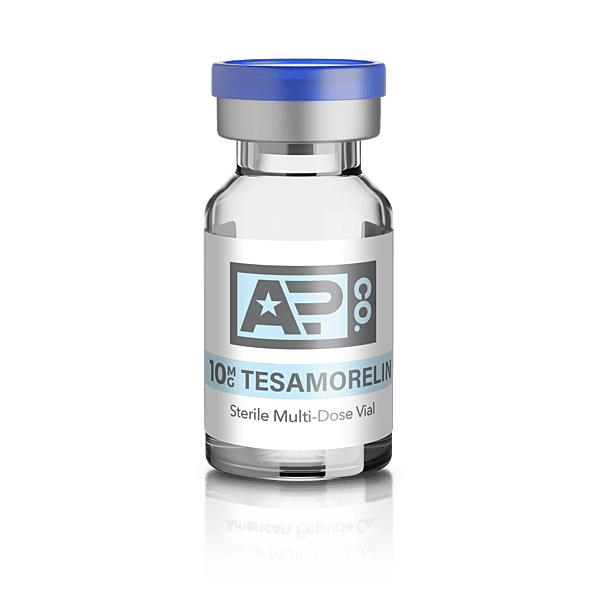
Tesamorelin (10mg)
Tesamorelin is a synthetic analog of growth hormone-releasing hormone (GHRH) with a hexenoyl group added at the N-terminus for stability, investigated extensively in research for effects on visceral adipose tissue.
About Tesamorelin
Tesamorelin is a synthetic 44-amino-acid GHRH analog stabilized by an N-terminal hexenoyl modification. This modification extends its activity at the GHRH receptor compared to native GHRH. Research has documented a relatively selective effect on visceral adipose tissue — making it distinct within the GHRH-analog class.
Mechanism in Research Literature
Research on Tesamorelin has documented:
- Binding to GHRH receptors in the anterior pituitary
- Stimulation of pulsatile endogenous growth hormone release
- Downstream IGF-1 elevation
- Selective effect on visceral adipose tissue in research models
- Effects on lipid profile including triglyceride reduction
- Maintenance of natural pulsatile GH pattern despite extended half-life
Research Context
Tesamorelin has been investigated in studies exploring:
- Visceral adipose tissue biology and reduction research
- HIV-associated lipodystrophy (the original clinical research context)
- Metabolic syndrome and cardiometabolic biomarkers
- GHRH receptor pharmacology and analog comparison
- Lipid profile effects of pulsatile GH elevation
Related Research Peptides
Tesamorelin appears in literature alongside other GHRH analogs (Sermorelin, CJC No DAC), metabolic research compounds (AOD-9604, 5-Amino-1MQ, MOTS-c), and GLP-1 receptor agonists.