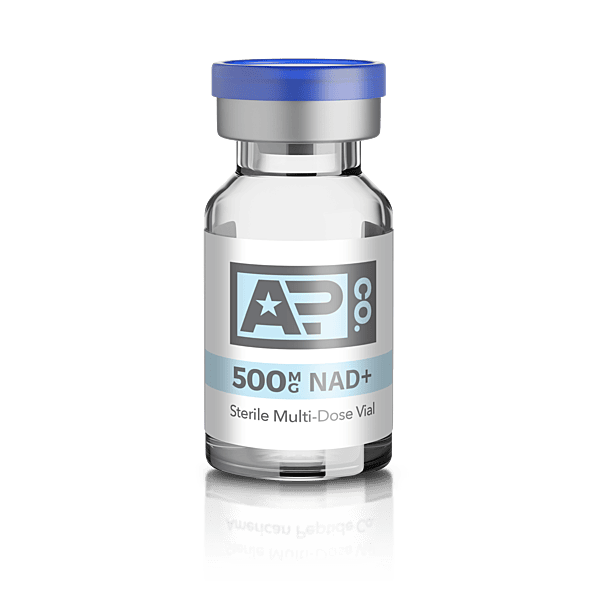
NAD+ (500mg)
NAD+ (Nicotinamide Adenine Dinucleotide) is a coenzyme present in every living cell, investigated extensively in research for its central roles in cellular metabolism, DNA repair, and sirtuin-mediated longevity biology.
About NAD+
NAD+ (Nicotinamide Adenine Dinucleotide) is a coenzyme essential to cellular metabolism. It functions as an electron carrier in oxidation-reduction reactions central to energy production and serves as a required substrate for several enzyme families involved in DNA repair and longevity biology. Cellular NAD+ levels decline substantially with age across multiple tissues, and this decline has been an active area of longevity research.
Mechanism in Research Literature
NAD+ has been documented to:
- Function as electron acceptor and donor in cellular redox reactions
- Serve as substrate for PARP enzymes involved in DNA damage repair
- Serve as substrate for sirtuins (SIRT1-SIRT7), a class of enzymes implicated in longevity
- Serve as substrate for CD38, an enzyme involved in immune signaling
- Participate in hundreds of metabolic reactions central to energy production
Research Context
NAD+ has been investigated in studies exploring:
- Mitochondrial bioenergetics and aging
- DNA damage repair via PARP enzymes
- Sirtuin-mediated longevity biology
- Age-related cognitive and metabolic decline
- Comparative pharmacology vs. NAD+ precursors (NR, NMN)
Related Research Peptides
NAD+ appears in literature alongside mitochondrial peptides (MOTS-c, SS-31), the NNMT inhibitor 5-Amino-1MQ (which preserves NAD+ precursors), and longevity-related compounds (Epithalon, NA Epithalon, GHK-Cu).