
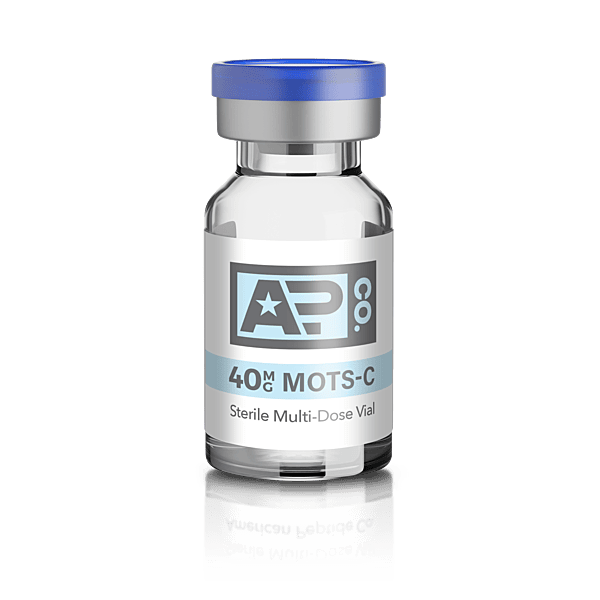
MOTS-c (40mg)
MOTS-c is a 16-amino-acid peptide encoded within mitochondrial DNA, investigated in research as a mitochondrial-derived peptide involved in metabolic regulation and AMPK signaling.
About MOTS-c
MOTS-c (Mitochondrial Open Reading Frame of the 12S rRNA-c) is unusual among signaling peptides in that it is encoded within mitochondrial DNA — specifically within the 12S rRNA gene — rather than nuclear DNA. It is one of the most-studied mitochondrial-derived peptides, with research exploring its role in metabolic regulation, insulin sensitivity, and exercise adaptation.
Mechanism in Research Literature
Research on MOTS-c has documented:
- Production by mitochondria as a signaling peptide
- Translocation to the nucleus where it influences gene expression
- Activation of AMPK (AMP-activated protein kinase) — a central cellular energy sensor
- Effects on glucose uptake and insulin sensitivity in research models
- Modulation of fatty acid oxidation
- Effects observed in exercise adaptation research
Research Context
MOTS-c has been investigated in studies exploring:
- Mitochondrial-nuclear retrograde signaling
- Insulin sensitivity and glucose homeostasis
- Exercise mimetic pharmacology and AMPK signaling
- Metabolic flexibility research
- Mitochondrial aging and age-related metabolic decline
Related Research Peptides
MOTS-c appears in literature alongside other mitochondrial- and metabolic-research peptides (NAD+, SS-31, 5-Amino-1MQ) and metabolic compounds in the GLP-1 and AOD-9604 space.