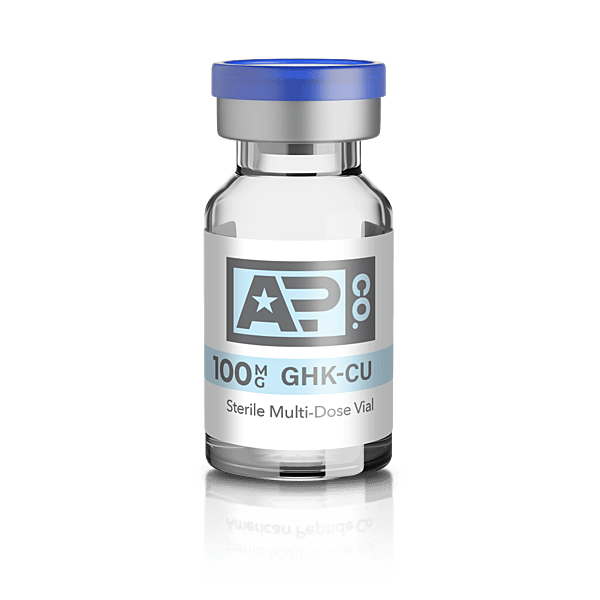
GHK-Cu (100mg)
GHK-Cu is a naturally occurring copper-binding tripeptide (Glycyl-L-Histidyl-L-Lysine + Cu²⁺) investigated extensively in dermatology and tissue repair research for its effects on collagen synthesis, gene expression, and antioxidant defense.
About GHK-Cu
GHK-Cu (Glycyl-L-Histidyl-L-Lysine bound to copper(II)) is a small copper-binding peptide that occurs naturally in human plasma. Plasma levels are highest in young adults and decline substantially with age. It has been extensively studied in dermatology, wound healing, and connective tissue research, with literature spanning collagen synthesis, gene expression modulation, antioxidant activity, and copper-mediated enzymatic support.
Mechanism in Research Literature
Research on GHK-Cu has documented multiple mechanisms:
- Delivery of copper to enzymes requiring it as a cofactor (lysyl oxidase, superoxide dismutase)
- Stimulation of collagen and elastin synthesis in fibroblast models
- Modulation of gene expression related to tissue remodeling and wound healing
- Antioxidant activity through copper-mediated redox cycling
- Anti-inflammatory effects in skin and connective tissue models
- Stimulation of hair follicle proliferation in research models
Research Context
GHK-Cu has been investigated in studies exploring:
- Skin aging and dermal collagen synthesis
- Wound healing dynamics including granulation and re-epithelialization
- Hair follicle biology and follicle density
- Copper metabolism and trace element delivery
- Gene expression profiling in tissue regeneration
Related Research Peptides
GHK-Cu appears in literature alongside other tissue-repair peptides (BPC-157, TB-500, KPV) and as a component of pre-formulated research blends (GLOW 50, KLOW).