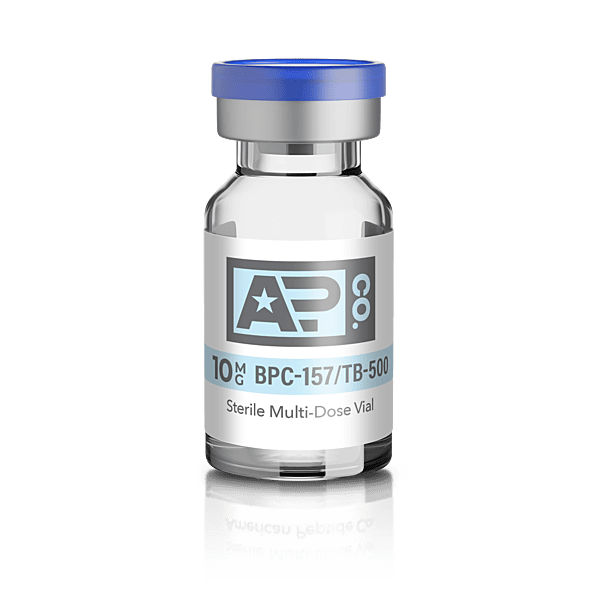
BPC-157 (10mg) / TB-500 (10mg)
Non-returnable
$175.00
A combined formulation of two extensively researched tissue-repair peptides: BPC-157 (10mg) and TB-500 (10mg). Both compounds appear together in tissue regeneration literature.
Disclaimer
For research only, not for human consumption. Choose Quantity
Product Details
About this formulation
This product combines two of the most-studied peptides in tissue repair research into a single vial:
- BPC-157 (10mg) — a synthetic pentadecapeptide derived from human gastric juice, investigated for angiogenesis, anti-inflammatory action, and connective tissue repair
- TB-500 (10mg) — a synthetic fragment of Thymosin Beta-4 investigated for actin regulation, cell migration, and tissue regeneration
Mechanism in Research Literature
The two peptides act through distinct but complementary pathways:
- BPC-157: angiogenesis promotion, GH receptor upregulation, inflammatory cytokine modulation
- TB-500: actin sequestration and reorganization, stem and endothelial cell migration, vascular remodeling
- Combined: research literature describes coverage of both the cellular migration aspect (TB-500) and the inflammatory/angiogenic aspect (BPC-157) of tissue repair
Research Context
This pairing appears in research exploring:
- Connective tissue repair (tendon, ligament, muscle)
- Wound healing dynamics including granulation and revascularization
- Gastric and intestinal mucosa repair
- Vascular remodeling and endothelial function
Related Research Peptides
This formulation sits in literature alongside GHK-Cu, IGF-1 LR3, CJC-1295, and Ipamorelin in the broader tissue-repair research space.
For research and educational use only. Not for human consumption. Not intended to diagnose, treat, cure, or prevent any disease.